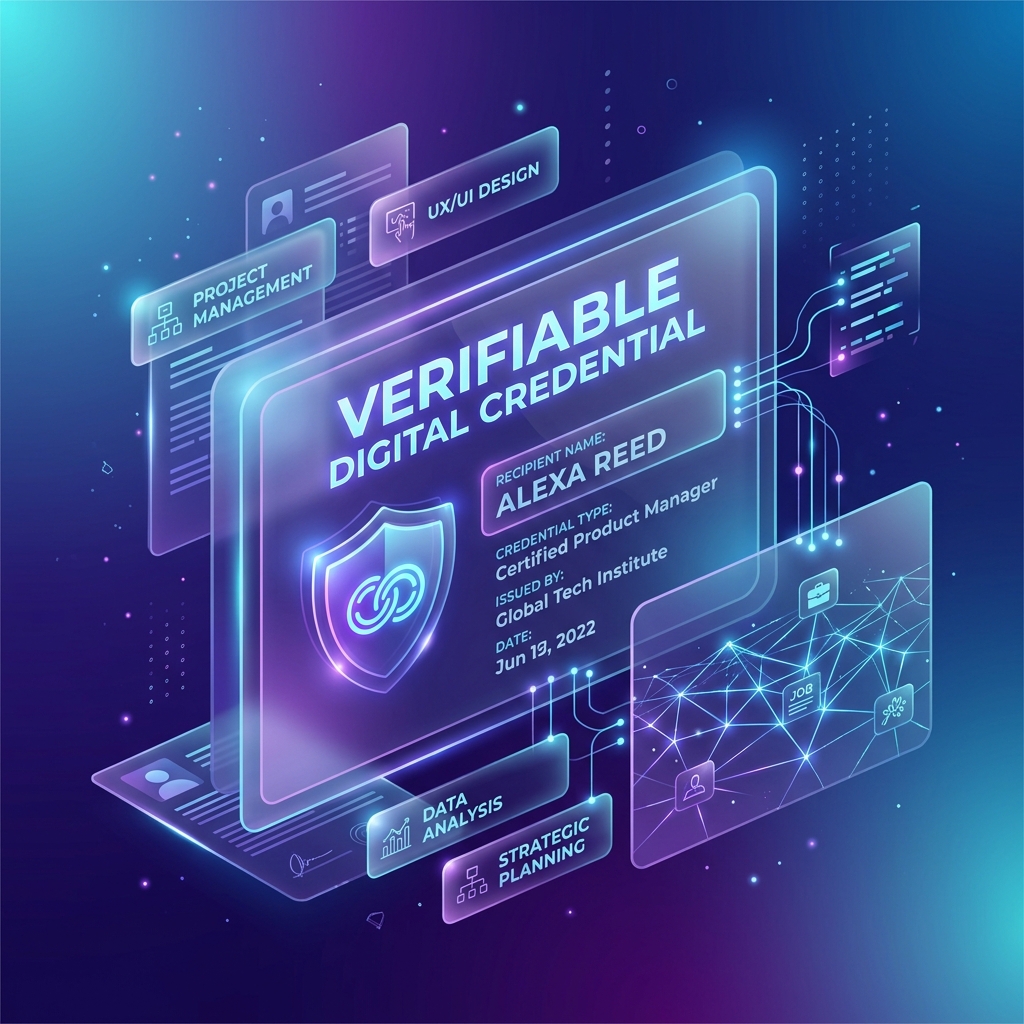
How to Secure Your Digital Credentials Against Fraud
A comprehensive guide to the technologies and protocols that ensure digital certificates and badges cannot be tampered with or forged.

As digital credentials become the standard for proving skills and education, the incentive for bad actors to forge them increases. Ensuring the security and integrity of your issued credentials is not just a technical requirement; it's essential for protecting your organization's reputation.
The Threat Landscape
Fraudsters use various techniques, from simply photoshopping a name onto a PDF certificate to more sophisticated methods like intercepting unencrypted data. If an employer catches a fake credential seemingly issued by your organization, your brand trust takes an immediate hit.
Core Security Technologies
- Cryptographic Signatures: The foundation of digital credential security. When you issue a badge, your platform should use a private key to cryptographically "sign" the data. Anyone verifying the badge uses your public key to ensure the data hasn't been altered since it was signed.
- Blockchain Anchoring: By storing a hash (a unique digital fingerprint) of the credential on a decentralized blockchain, you create an immutable record. If a fraudster alters even one pixel or one letter of the credential, the hash will change, immediately flagging it as invalid.
- Decentralized Identifiers (DIDs): DIDs provide a verifiable, self-sovereign digital identity for both the issuer and the recipient, ensuring that credentials are tied to cryptographically secure identities rather than easily spoofed email addresses.
Best Practices for Issuers
- Never Rely on PDFs Alone: A PDF is a document, not a verifiable credential. Always issue a secure digital badge alongside or instead of a static document.
- Implement Easy Verification: Ensure that employers and third parties have a frictionless way to verify credentials, such as a one-click verification portal on your website.
- Establish Revocation Protocols: Have a clear technical process for revoking credentials if they were issued in error or if the recipient violates terms of conduct.
Security is not an afterthought in credentialing; it is the bedrock upon which the entire system is built.